Chiropractic Treatment for Chronic Back Pain
Table of Contents
- What Chiropractic Treatment for Chronic Back Pain Actually Involves
- Non-Surgical Back Pain Relief Options in 2026
- What the Evidence Says About Chronic Back Pain Relief
- Chiropractic Care Frequency for Back Pain: How Often Is Enough?
- How to Prepare for a Chiropractic Consultation
- Safety, Risks, and Who Should Avoid Adjustments
- Cost, Insurance, and Long-Term Maintenance Planning
- Frequently Asked Questions
Last Updated: September 23, 2026
What Chiropractic Treatment for Chronic Back Pain Actually Involves
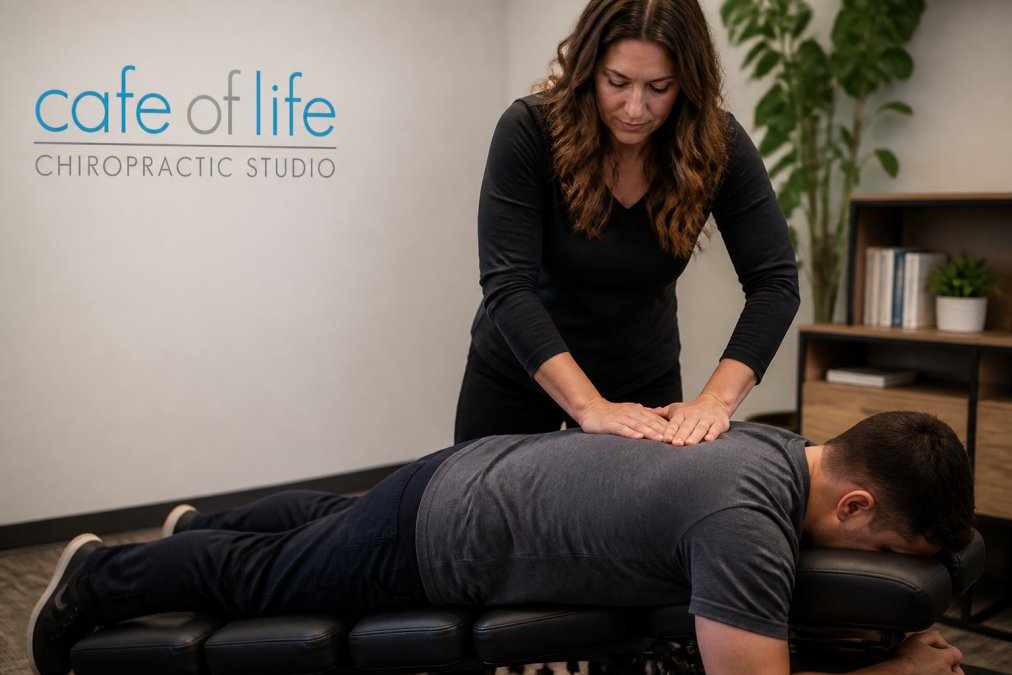
Chiropractic treatment for chronic back pain is a hands-on, non-surgical approach that focuses on the musculoskeletal system. At Cafe of Life Chiropractic Studio, we see it as one part of a broader plan for spinal health. The goal is simple: restore joint mobility and reduce the nerve pressure and inflammation that keep pain hanging around.

How Adjustments Work on the Musculoskeletal System
An adjustment, or spinal manipulation, applies a controlled force to a joint that is not moving well. That force helps the joint move through its normal range again. When a joint moves properly, the muscles around it relax, and pressure on nearby nerves eases.
Spinal Manipulation and Soft Tissue Therapy Explained
Spinal manipulation targets the joints. Soft tissue therapy targets the muscles, tendons, and fascia around them. The two work best together.
Non-Surgical Back Pain Relief Options in 2026
Non-surgical back pain relief covers many options, and chiropractic care is one of them. Others include physiotherapy, massage therapy, acupuncture, and structured exercise programs. Many people combine two or three.
Here is how the main options compare:
Approach | What It Targets | Typical Focus |
|---|---|---|
Chiropractic care | Joint dysfunction, alignment | Spinal manipulation, soft tissue therapy |
Physiotherapy | Strength, rehabilitation | Exercise, movement retraining |
Massage therapy | Muscle tension | Soft tissue release |
Acupuncture | Pain signaling | Needle-based pain management |
Exercise programs | Long-term stability | Core strength, posture correction |
What the Evidence Says About Chronic Back Pain Relief
Evidence-based care means treatment choices are guided by research and clinical guidelines, not habit or tradition. For chronic low back pain, that distinction matters because the recommendations have shifted meaningfully over the past decade.
What the Guidelines Actually Recommend
Public health guidance on low back pain consistently recommends starting with non-invasive, non-pharmacological options before moving to imaging, injections, opioids, or surgery. That first-line list typically includes: Physical therapy, spinal manipulation, and exercise programs often serve as the foundation for broader recovery strategies coordinated through multidisciplinary pain clinics.
- Education and reassurance about the condition
- Staying active and avoiding prolonged rest
- Supervised exercise and movement-based therapy
- Manual therapy, including spinal manipulation
- Heat, and for some people, short-term symptom relief strategies
How to Tell If Your Care Is Evidence-Informed
You do not need to read the studies yourself. You can judge a provider by how they talk about the plan:
- They explain what the treatment is expected to do and roughly how long it should take to see change.
- They measure progress with something concrete, pain scores, range of motion, how many minutes you can walk or sit.
- They give you things to do between visits.
- They tell you what would make them refer you elsewhere.
Chiropractic Care Frequency for Back Pain: How Often Is Enough?
Chiropractic care frequency for back pain varies from person to person. There is no single schedule that fits everyone. Early on, visits are usually closer together. As pain settles and movement improves, they spread out.
A typical pattern looks like this:
- First 2-4 weeks: more frequent visits to calm symptoms and restore motion
- Weeks 4-8: fewer visits as you take on more movement on your own
- Ongoing: occasional check-ins or a maintenance plan
How to Prepare for a Chiropractic Consultation
A good first visit starts before you walk in the door. Preparation helps your chiropractor understand your history and build a treatment plan that fits.
What to Bring and What to Expect
Bring these items to your first appointment:
- A list of your current medications and supplements
- Any recent imaging reports or test results
- Notes on when the pain started and what makes it worse
- Comfortable clothing you can move in
- Your insurance information
Your first visit usually includes a health history, a physical examination, and a discussion of your goals. Some providers order diagnostic imaging if the exam points to a specific concern. You should leave with a clear picture of the proposed treatment plan.
Safety, Risks, and Who Should Avoid Adjustments
Chiropractic adjustments are generally well tolerated, but they are not risk-free, and a good provider treats safety as an ongoing process rather than a one-time checkbox.
Common, Expected Side Effects
Mild soreness or stiffness for a day or two after treatment is the most common complaint. Some people feel tired or have a temporary headache. These reactions usually settle on their own and are not a sign that something went wrong. If soreness lasts more than a few days or gets worse instead of better, tell your provider.
Serious Risks
Serious complications are rare. The most discussed risk involves the neck, where forceful manipulation has been linked to rare vascular injury (The potential dangers of neck manipulation & risk for dissection and devastating stroke). This is why a careful provider screens for risk factors before touching the neck and uses gentler techniques when appropriate.
Other uncommon risks include:
- Worsening of a herniated disc, particularly with aggressive technique
- Rib fracture in people with weakened bone
- Cauda equina syndrome, a rare but serious nerve compression emergency
Red Flags That Change the Plan
Before any adjustment, a provider should screen for symptoms that suggest something other than mechanical back pain. These red flags include:
- Unexplained weight loss, fever, or night sweats
- Pain that is worse at night or at rest and does not change with position
- Loss of bladder or bowel control, or numbness in the saddle area
- Progressive weakness in the legs
- A history of cancer, or a recent significant trauma
- Long-term steroid use or known osteoporosis
Who Should Avoid or Modify Adjustments
Some people should avoid certain adjustments or have them modified:
- People with severe osteoporosis or spinal fractures
- Those with certain inflammatory joint conditions, such as active rheumatoid arthritis in the spine
- Anyone with a bleeding disorder or on blood thinners
- People with recent spinal surgery, unless cleared by their surgeon
- Pregnant patients, who may need positioning and technique changes
The Informed-Consent Conversation
You should be told, in plain language, what the proposed treatment involves, what the realistic benefits are, what the risks are, and what alternatives exist. You should also be told you can decline any part of it. If that conversation does not happen, ask for it.
Cost, Insurance, and Long-Term Maintenance Planning
Cost and coverage are where most people get stuck, so it pays to sort this out early. Chiropractic care is often covered in part by extended health plans, but coverage limits, referral rules, and claim processes vary by insurer. Check your own plan before your first visit.
- How many visits per year does my plan cover?
- What portion is reimbursed, and what do I pay up front?
- Does the clinic bill my insurer directly or do I submit receipts?
Self-care at home supports everything done in the clinic:
- Daily stretching for the hips and lower back
- Core strengthening two to three times a week
- Ergonomic adjustments to your desk and chair
- Short movement breaks every hour if you sit for work
Frequently Asked Questions
Is chiropractic care effective for long-term chronic back pain?
Research on chiropractic treatment for chronic back pain shows it can reduce pain and improve function for many people, particularly when combined with therapeutic exercise and posture correction. Results vary by individual and condition. A treatment plan typically starts with a physical examination to identify joint dysfunction and nerve pressure, then progresses through manual therapy and rehabilitation. Some people notice improvement within a few visits; others need several weeks. Your chiropractor should reassess progress regularly and adjust the approach if outcomes stall.
What should I expect during my first chiropractic visit for back pain?
A first visit usually includes a health history review, physical examination, and possibly diagnostic imaging if indicated. The chiropractor will assess spinal alignment, joint mobility, and range of motion. If treatment is appropriate, a gentle adjustment or soft tissue therapy may follow. Expect the whole appointment to take 30 to 60 minutes. Bring a list of medications, previous treatments, and any imaging reports you have. Wear comfortable clothing you can move in.
How many chiropractic sessions are typically needed for chronic back pain?
Chiropractic care frequency for back pain depends on whether the pain is acute or chronic, your overall health, and how you respond to treatment. Many people start with two to three visits per week for a few weeks, then taper to once weekly or monthly as part of a maintenance plan. Chronic conditions often need longer initial care than acute flare-ups. Your chiropractor should outline a proposed schedule and review it based on your progress.
Does provincial health insurance cover chiropractic care?
Coverage varies by province and territory. In some provinces, partial coverage may be available for certain patients or conditions, while in others chiropractic care is covered mainly through private extended health plans. Check with your provincial health ministry and your extended benefits provider to confirm what is covered. Many clinics offer direct billing to insurers. Ask about fees, payment options, and whether a doctor's referral is needed before booking.
Chronic back pain rarely resolves with a single fix. It takes a clear plan, the right hands-on care, and habits you keep up at home. Cafe of Life Chiropractic Studio offers natural, drug-free care tailored to your body, with specialized support for pregnancy, pediatric development, and athletic recovery. Get started with Cafe of Life Chiropractic Studio and build a plan that helps you move, sleep, and live better.