10 Holistic Techniques for Chronic Muscle Tension
Quick Summary
The best holistic techniques for chronic muscle tension include diaphragmatic breathing, progressive muscle relaxation, gentle stretching, and gentle mobility work. These free, low-effort practices are easy to test in the first week. Adding one new practice at a time helps you see what is actually working for chronic muscle tension.
- Diaphragmatic breathing takes 3 to 5 minutes per session and is free.
- Progressive muscle relaxation works best for whole-body tightness and difficulty falling asleep.
- Heat is best used as a preparation step before stretching, not as a standalone treatment.
- Persistent one-sided pain or numbness, tingling, or weakness should be checked before relying on relaxation alone.
- Keep a simple note of how muscles feel before and after sessions to spot patterns over two to four weeks.
Table of Contents
- What Causes Chronic Muscle Tension and How to Tell It Apart
- Comparing the 10 Techniques by Evidence, Effort, Cost and Best Use
- Breathing and Relaxation: Progressive Muscle Relaxation for Muscle Tension
- Movement Techniques: Stretching, Gentle Mobility and Yoga
- Exercises for Muscle Tension and Anxiety: Somatic Movement, Massage and Heat
- A 10-Minute Muscle Tension Relief Routine You Can Repeat Daily
- Safety, Limits and When to Book a Professional Assessment
- Booking Your First Visit at Cafe of Life Chiropractic Studio
- Frequently Asked Questions
What Causes Chronic Muscle Tension and How to Tell It Apart
Chronic muscle tension is muscle tightness that lingers for weeks or months rather than fading after a rest. Most people feel it in the neck, shoulders, upper back, or lower back. It often shows up as a dull ache, stiffness on waking, or a sense that the muscles never fully let go.
Several things can keep muscles tight over time. Long hours at a desk, repeated poor posture, lack of movement, and sleeping in an awkward position are all common triggers. Stress and anxiety matter too, because the body tends to brace when the mind is under pressure, a response documented by the Mayo Clinic.
Stress-related tension versus other causes
Stress-related tension usually comes and goes with mood, workload, or sleep. It tends to be worst during deadlines or after a hard week, and it often eases on weekends or holidays. The tension is typically spread across several muscle groups, such as the jaw, neck, and shoulders at the same time. Persistent tightness in these areas often requires targeted movement patterns focused on relieving chronic neck tension to prevent the discomfort from becoming a permanent fixture of your daily routine.
Other causes look different. A tight spot that stays in one place, worsens with a specific movement, or comes with numbness, tingling, or weakness needs a professional look. Pain that wakes you at night or follows an injury also deserves a proper assessment rather than self-treatment.
- Stress-related: comes and goes, spreads across muscle groups, eases during rest
- Mechanical or postural: tied to specific positions, worsens with use
- Needs a professional look: numbness, tingling, weakness, night pain, or pain after an injury
Watch out: Do not assume all tension is stress. Persistent one-sided pain or nerve symptoms should be checked before you rely on relaxation techniques alone.
Comparing the 10 Techniques by Evidence, Effort, Cost and Best Use
The harder question is which of these techniques to start with, and why. The comparison below rates each technique on four practical dimensions: how strong the supporting evidence is, how much time and effort it takes, what it typically costs, and the situation where it is most likely to help. Use it as a starting point, not a prescription.
| Technique | Evidence Base | Time per Session | Typical Cost | Best Use |
|---|---|---|---|---|
| Diaphragmatic breathing | Moderate | 3 to 5 minutes | Free | Stress-linked tension, quick reset before sleep |
| Progressive muscle relaxation | Moderate | 10 to 15 minutes | Free | Whole-body tightness, difficulty falling asleep |
| Gentle stretching | Moderate | 5 to 10 minutes | Free | Morning stiffness, post-desk tightness |
| Gentle mobility work | Moderate | 5 to 10 minutes | Free | Desk-related stiffness in neck, hips, and mid-back |
| Yoga | Moderate | 20 to 60 minutes | Free to class fees | Ongoing flexibility and body awareness |
| Somatic movement | Limited | 10 to 20 minutes | Free to class fees | Tension linked to anxiety or guarded movement |
| Massage | Moderate | 30 to 60 minutes | Varies by provider | Localized knots and sore spots |
| Heat therapy | Limited | 15 to 20 minutes | Low | Sore, stiff muscles before stretching |
| Gentle exercise | Moderate | 20 to 30 minutes | Free to gym fees | General fitness and mood support |
| Relaxation routines | Limited | 5 to 15 minutes | Free | Evening wind-down and sleep preparation |
Time per Session
A few patterns are worth noting. The free, low-effort techniques (breathing, PMR, stretching, mobility) are the easiest to test in the first week, and they carry little risk. Heat is best treated as a preparation step rather than a standalone treatment, because it loosens tissue temporarily without changing the habits that keep tension returning.
Evidence strength here is a general judgment based on how consistently these techniques appear in clinical and rehabilitation guidance, not a guarantee for any one person. A technique with limited evidence can still help; it simply has less research behind it. Costs vary by provider, so check current rates with each provider before booking.
Watch out: Do not stack every technique in the first week. Adding one new practice at a time makes it possible to tell what is actually helping and what is not.
Breathing and Relaxation: Progressive Muscle Relaxation for Muscle Tension
Progressive muscle relaxation, often called PMR, works by tensing one muscle group at a time and then letting it go. The contrast helps you notice how tight your body really is. Many people find it useful before bed or during a stressful day. For more structured calming practices, see beginner nervous system regulation exercises.
To try it, start with your feet. Tense the muscles for about five seconds, then release for about ten seconds. Work upward through the calves, thighs, stomach, hands, arms, shoulders, and face.
Diaphragmatic breathing and the relaxation response
Diaphragmatic breathing, sometimes called belly breathing, slows the breath and encourages the body to settle. Sit or lie down with one hand on your chest and one on your belly. Breathe in slowly through the nose so the belly rises, then breathe out gently through the mouth.
Aim for about six slow breaths a minute for five minutes. Many people notice their shoulders drop as the breath lengthens. This is often called the relaxation response, and it can make the other techniques in this guide easier to do.
Common mistake: Forcing the breath deeper than is comfortable. Gentle and slow works better than deep and strained.
Movement Techniques: Stretching, Gentle Mobility and Yoga
Movement is one of the simplest ways to ease stiffness. Short, regular sessions often help more than one long session each week. The goal is comfortable range of motion, not pushing into pain.
Try cat-cow stretches, seated rotations, and knee-to-chest movements. For more hands-free steps, see six natural relief steps for neck tension. Hold each stretch for 20 to 30 seconds and breathe steadily. Gentle yoga classes can add structure, especially for people who like guidance.
- Cat-cow: 5 slow repetitions for the spine
- Seated rotation: 30 seconds each side
- Knee-to-chest: 20 seconds each leg
Exercises for Muscle Tension and Anxiety: Somatic Movement, Massage and Heat
Somatic movement focuses on slow, mindful motion that helps you notice where you hold tension. It can be useful for people whose tightness feels linked to anxiety. Massage and heat offer hands-on relief for knots and sore spots.
A warm bath or a heat pack can relax muscles and make stretching feel easier. Massage works best when the pressure stays within a comfortable range. Some people also find that short sessions of self-massage with a foam roller help.
We recommend pairing heat with gentle movement rather than using heat alone. That combination often gives the most lasting relief.
A 10-Minute Muscle Tension Relief Routine You Can Repeat Daily
A short daily routine is easier to keep than a long plan. Try this sequence each day:
- Two minutes of diaphragmatic breathing
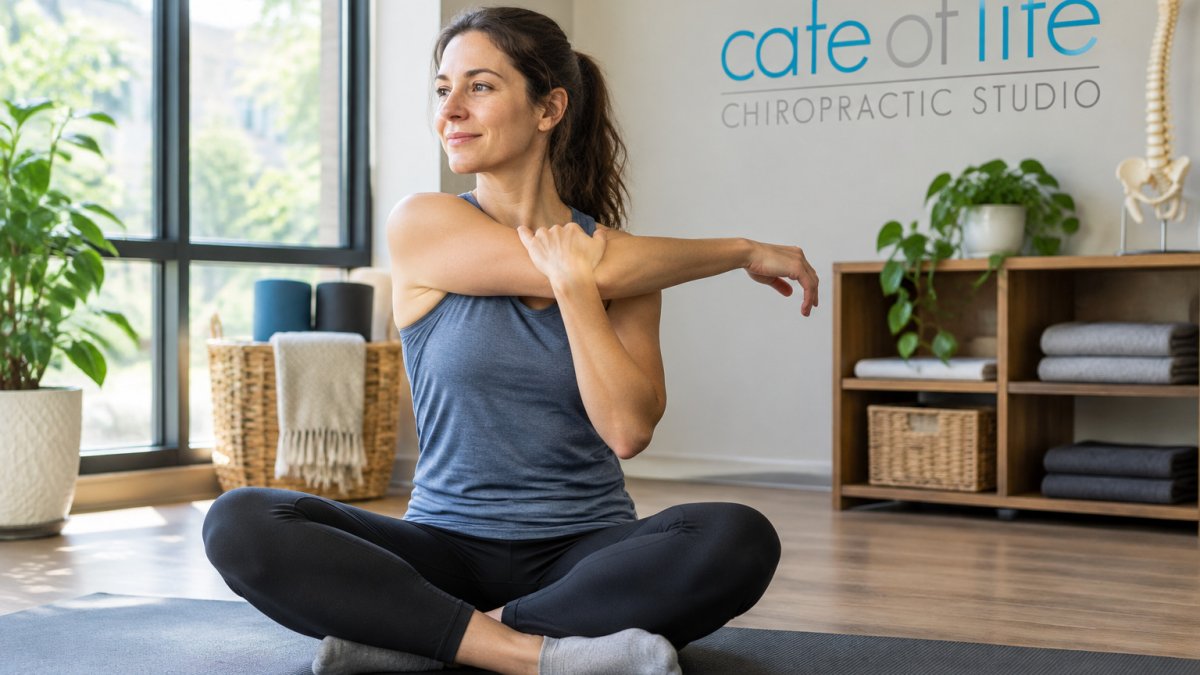
- Three minutes of gentle neck and shoulder stretches
- Three minutes of cat-cow and seated rotations
- Two minutes of progressive muscle relaxation for the legs and arms
Keep a simple note of how your muscles feel before and after each session. Over two to four weeks, patterns usually become clear. If nothing changes, adjust the routine or ask a professional for guidance.
Safety, Limits and When to Book a Professional Assessment
These techniques are general wellness tools, not a substitute for medical care. Stop any movement that causes sharp pain, and avoid heat on areas with poor circulation or reduced sensation. People with heart conditions, pregnancy, recent injuries, or joint problems should check with a qualified professional first.
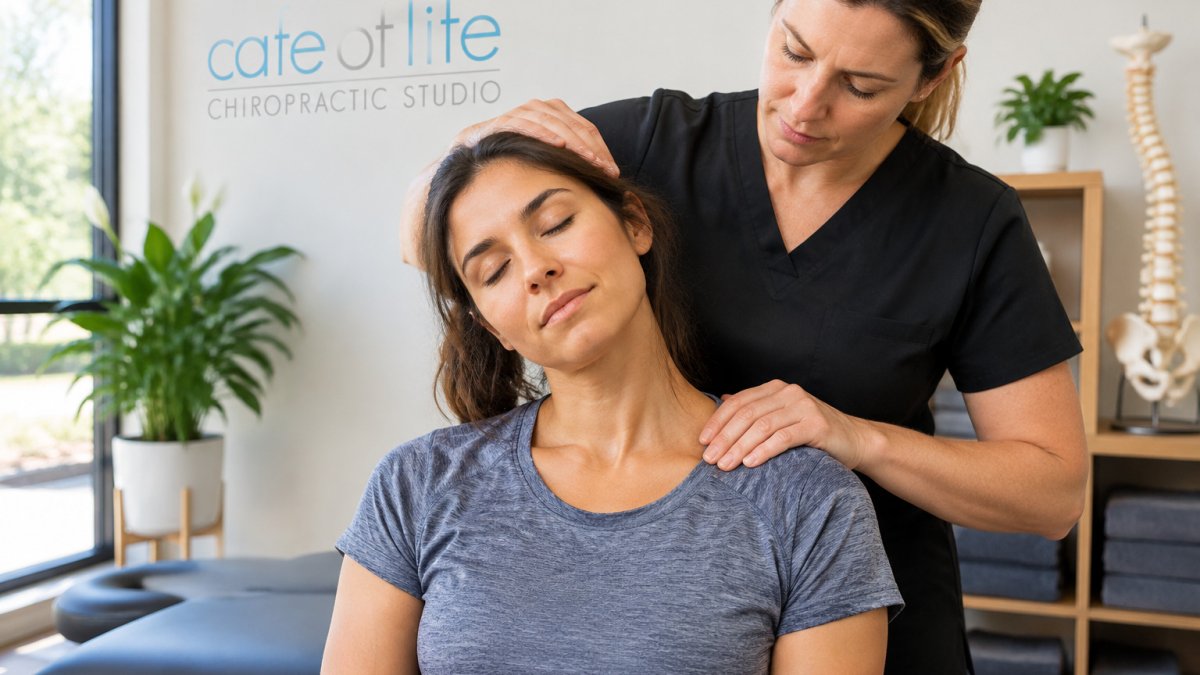
Book an assessment if tension lasts more than a few weeks, keeps returning in one spot, or comes with numbness, weakness, or night pain. To decide how often to go and how to pick a provider, read how often to see a chiropractor and how to choose one. A qualified practitioner can help identify the cause and suggest a safe plan. A chiropractic assessment may be one option to discuss with a qualified professional. Contact Cafe of Life Chiropractic Studio through its website to book an appointment.
Booking Your First Visit at Cafe of Life Chiropractic Studio
If you have tried self-care and the tension keeps coming back, a first visit can help you understand what is happening. Schedule your first visit today! Bring a list of your symptoms and any medications so the conversation can start from your history.
Frequently Asked Questions
What causes chronic muscle tension?
Chronic muscle tension usually builds from repeated load, poor posture, prolonged sitting, inactivity, and sustained psychological stress. Stress keeps the nervous system in a state of alertness, so muscles stay partially contracted for long periods. Tension can also follow injury or overuse. Because several causes overlap, the most useful first step is to track when tightness appears and what preceded it. If pain is severe, persistent, or accompanied by numbness, weakness or unexplained symptoms, a qualified health professional should assess it rather than leaving it to self-treatment.
Does progressive muscle relaxation help with muscle tension?
Progressive muscle relaxation involves tensing a muscle group briefly, then releasing it while noticing the difference. Many people find it useful for stress-related tightness because it trains awareness of tension they had stopped noticing. It requires little equipment and can be done in about 10 to 15 minutes. It works best as one part of a broader plan that includes movement and, where appropriate, professional care. Stop any exercise that causes sharp pain, and consult a provider first if you have an existing injury.
Can stress cause persistent muscle tightness?
Yes. Psychological stress activates the body's stress response, which can raise baseline muscle tone in the neck, shoulders, jaw and back. When stress is ongoing, these muscles may rarely fully relax, which the body experiences as stiffness or aching. Breathing exercises, progressive relaxation and regular gentle movement are common ways people address this pattern. Persistent tightness that does not change with these approaches, or that comes with other symptoms, warrants a proper assessment to rule out other causes.
When should I see a health professional about muscle tension?
See a qualified health professional if muscle tension lasts for several weeks despite self-care, worsens over time, follows an injury, or comes with numbness, tingling, weakness, fever, or pain that wakes you at night. A consultation can help distinguish stress-related tension from other causes and suggest an appropriate plan. Cafe of Life Chiropractic Studio offers a first visit; contact the studio through its website for current appointment details and to book.