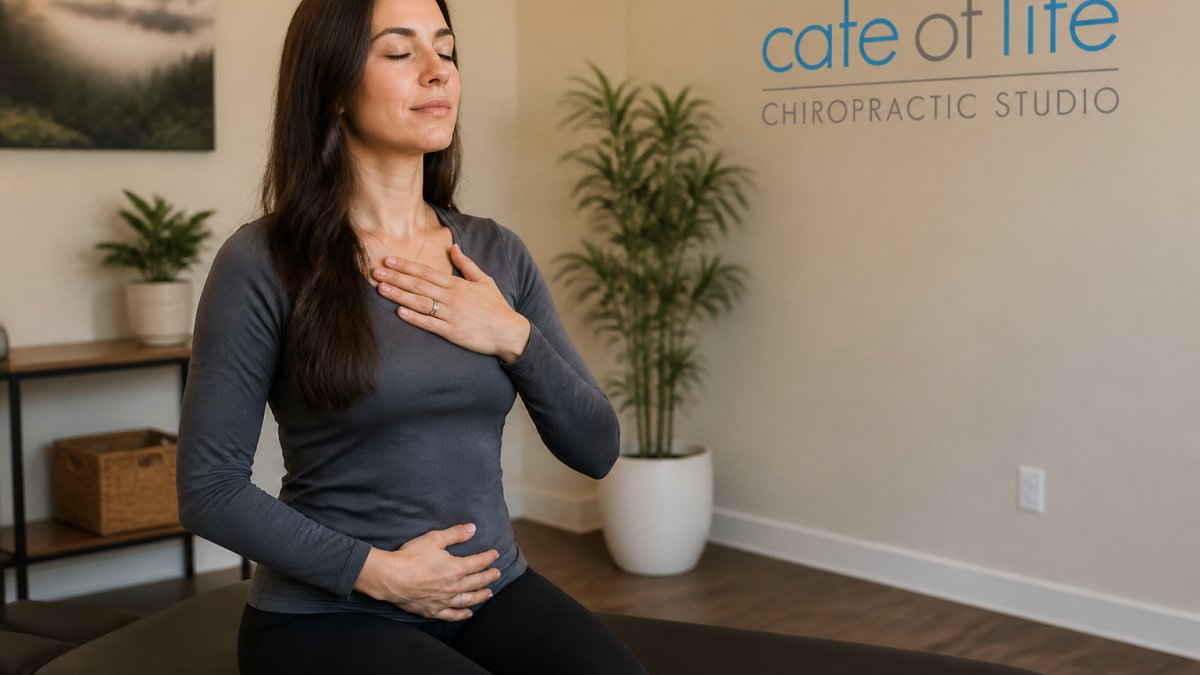
7 Nervous System Regulation Exercises for Beginners
Last Updated: October 28, 2026
Quick Summary
To practice nervous system regulation as a beginner, start with one or two exercises that match your current state: slow breathing with a long exhale if you feel wound up, gentle movement or orienting if you feel shut down. Do it for two minutes and notice whether your body shifts even slightly.
- Inhale through your nose for four counts and exhale for six, repeated for two minutes.
- The 5-4-3-2-1 method names five things you see, four you touch, three you hear, two you smell, and one you taste.
- Attach your daily routine to a habit you never skip, like morning coffee or brushing your teeth.
- Week one of the four-week progression focuses on slow breathing only, two minutes daily.
- Stop if you notice dizziness, tingling, rising panic, or feeling detached from your body.
Table of Contents
- What Nervous System Regulation Actually Means for Beginners
- 7 Nervous System Regulation Exercises to Start With
- Breathing Exercises for Anxiety: Slow, Deep, and Repeatable
- How to Build a Daily Nervous System Regulation Routine
- How to Measure Progress Without Expecting Instant Calm
- Safety, Adaptations, and When to Stop
- Book a Consultation to Build Your Regulation Plan
- Frequently Asked Questions
What Nervous System Regulation Actually Means for Beginners
Nervous system regulation is the practice of using simple, repeatable actions to help your body shift out of a stress state and back toward calm. It is a skill, not a personality trait.
Your nervous system runs two main settings. The sympathetic branch speeds things up: faster heart rate, tighter muscles, quicker breathing. The parasympathetic branch slows things down and supports rest, digestion, and repair. Regulation means you can move between them on purpose.
That matters because stress is not the enemy. Being stuck is.
How Your Body Responds to Stress
Stress starts in the brain and travels fast. Your body releases stress hormones, your heart rate climbs, and your breathing gets shallow (Stress and Performance). Muscles in your neck, jaw, and shoulders tighten. This is normal and useful in short bursts.
The trouble comes when the switch never flips back. Many people carry low-grade tension all day without noticing. Over time, that shows up as poor sleep quality, low mood, neck tension, and a feeling of being wired but tired.
The good news: your body wants to return to balance. It just needs the right signals.
7 Nervous System Regulation Exercises to Start With
Most beginner guides hand you a menu of exercises and leave you to guess. A more useful approach is to match the practice to what your body is actually doing right now. Regulation is not one skill; it is a set of switches, and the right switch depends on whether you feel wound up, shut down, or roughly settled.
A simple way to tell: check your breathing, your muscles, and your energy. If your breath is high in your chest, your jaw or shoulders are tight, and your thoughts are racing, you are in an activated state. If you feel flat, foggy, heavy, or disconnected, you are in a shut-down state. If you feel steady but a little tense, you are settled enough to build capacity.

If You Feel Activated (Wound Up, Racing, Tight)
Your goal here is to lengthen the exhale and give the body a clear slow-down signal. These are the practices to reach for first.
- Slow breathing with a long exhale. Inhale through your nose for four counts, exhale for six. Repeat for two minutes. Keep the breath quiet and gentle rather than deep and forceful.
- Grounding through your feet. Stand barefoot and press your feet into the floor. Notice five points of contact on each foot, then shift your weight slowly side to side. This gives your brain a steady stream of physical input to attend to instead of the stress loop.
- The 5-4-3-2-1 method. Name five things you can see, four you can touch, three you can hear, two you can smell, and one you can taste. It is quick, private, and works almost anywhere.
If You Feel Shut Down (Flat, Foggy, Heavy)
When you are shut down, more slow breathing can sometimes deepen the fog. The better move is gentle activation: movement, orientation, and contact.
- Gentle movement. A five-minute walk, light stretching, or shoulder rolls all count. For targeted help, see these natural relief steps for neck tension.
- Orienting to the room. Slowly turn your head and let your eyes rest on one object at a time. Name what you see. This is a simple way to remind your system that the environment is not a threat.
- Social connection. A real conversation with someone safe is one of the fastest ways to settle your body. Co-regulation, where a calm person helps your system settle, is a well-known phenomenon and often easier than doing it alone.
If You Feel Relatively Settled
Use these to build capacity so the harder days are less hard.
- A short body scan or mindfulness in one task. Close your eyes and move your attention from your head to your toes, noticing physical sensations without judging them. Or wash dishes or make tea with full attention on sound, warmth, and texture. Ten minutes outside, ideally where you can see trees or sky, also fits here.
For a deeper look at how your body and nervous system connect, read how chiropractic affects the nervous system.
Breathing Exercises for Anxiety: Slow, Deep, and Repeatable
Breathing exercises for anxiety can be practiced slowly and repeatably. Aim for a longer exhale than inhale.
Try this: sit with a relaxed posture, breathe in through your nose for a count of four, and out through your mouth for a count of six. Do it for two minutes, twice a day. The American Lung Association's breathing guidance notes that controlled breathing can help ease tension and support relaxation.
How to Build a Daily Nervous System Regulation Routine
A daily nervous system regulation routine works best when it is short and tied to something you already do. Attach your practice to a habit you never skip, like your morning coffee or brushing your teeth.
Keep the routine boring on purpose:
- Morning: two minutes of slow breathing before you check your phone.
- Midday: a five-minute walk outside.
- Evening: a short body scan in bed.
A Four-Week Progression for Beginners
Build up slowly so the habit sticks.
| Week | Focus | Daily Time | Goal |
|---|---|---|---|
| 1 | Slow breathing only | 2 minutes | Learn the long exhale |
| 2 | Add grounding | 4 minutes | Use it during mild stress |
| 3 | Add a short walk | 10 minutes | Pair movement with breath |
| 4 | Add evening body scan | 15 minutes | Wind down before sleep |
If you miss a day, just start again. Progress is not linear.
How to Measure Progress Without Expecting Instant Calm
A simple way to track progress is a nightly one-line note: rate your stress from one to ten. Over a month, patterns show up that a single day cannot.
Safety, Adaptations, and When to Stop
A trauma-informed approach means you are allowed to modify or skip anything that does not feel safe. If your body is sensitive, this guide to gentle adjustments for sensitive patients explains how adapted care works.
Adaptations If Closed Eyes, Stillness, or Breath Focus Feel Difficult
If closed eyes, long stillness, or focused breathing feel uncomfortable, try these swaps:
- Keep your eyes open and soften your gaze toward a fixed point instead of closing them.
- Choose movement over stillness. Walking, stretching, or rocking gently are alternatives to sitting still.
- Skip breath counting and focus on external senses instead, such as the temperature of the air or the texture of a chair.
- Shorten the practice. Thirty to sixty seconds counts. You can build up later.
- Use grounding through your feet or hands rather than a body scan if internal attention feels overwhelming.
Stop Cues
Stop the exercise and return to a neutral activity if you notice any of the following:
- Dizziness, lightheadedness, or tingling in your hands or face.
- A rising sense of panic, dissociation, or feeling detached from your body.
- Chest pain, faintness, or shortness of breath that does not settle with rest.
If chest pain, fainting, or persistent shortness of breath occurs, seek medical advice promptly (Heart disease: Symptoms and treatment). If you have a heart or respiratory condition, are pregnant, or are supporting a young child, check with a qualified health professional before starting new breathwork or movement practices.
Book a Consultation to Build Your Regulation Plan
Learning to practice nervous system regulation for beginners is a skill you build one small step at a time. If tension, neck pain, or stress keeps pulling you out of balance, professional support can help. You can also explore chiropractic care for nervous system conditions in London, ON and book an appointment. At Cafe of Life Chiropractic Studio, we offer natural, drug-free care focused on mobility, posture, and whole-body well-being. Before you book, you can read real Google reviews and testimonials from our patients. Our team supports every stage of life, from pregnancy and pediatric development to athletic recovery.
Frequently Asked Questions
What are simple nervous system regulation exercises for beginners?
Start with three: slow breathing where the exhale is longer than the inhale, a five-senses grounding scan, and a short body scan from head to toe.
How long does it take to regulate your nervous system?
If anxiety stays high or worsens, speak with a qualified health professional.
Can breathing exercises for anxiety really help regulate the nervous system?
Slow breathing with a longer exhale is one option to try. Try four counts in, six counts out, for two minutes. Stop if you feel dizzy and return to normal breathing.
When should I seek professional help for anxiety or ongoing distress?
Talk to a qualified health professional if anxiety interferes with sleep, work, or relationships, lasts most days for several weeks, or comes with panic attacks. Seek urgent help if you have thoughts of harming yourself. Nervous system regulation exercises are a supportive habit, not a treatment for a diagnosed condition. A clinician can assess what is happening and discuss options with you.
Start with one exercise today, not seven. That is the honest first step, and it is enough. Get started with Cafe of Life Chiropractic Studio and build a calmer, more resilient body, one small habit at a time.