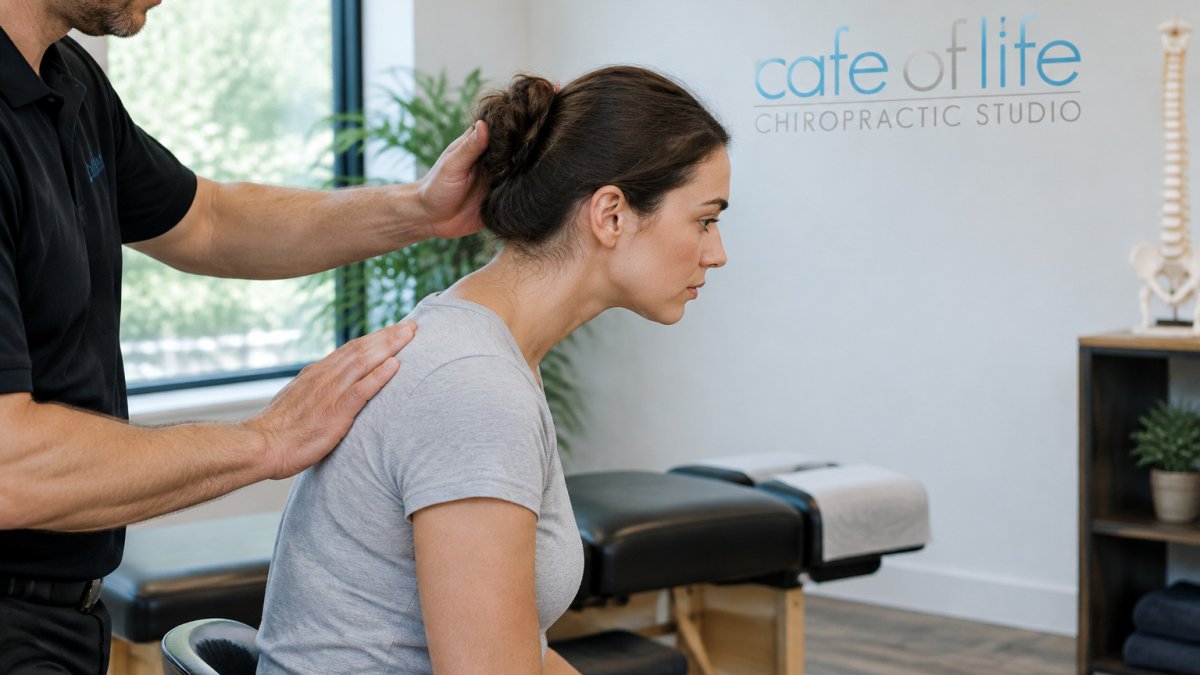
What Is Forward Head Posture? Causes and Fixes
Quick Summary
Forward head posture is when your head sits in front of your shoulders instead of stacked over them. In neutral alignment, your ears line up over your shoulders, but with forward head posture the head drifts ahead, forcing the neck and upper back to work harder. It often develops slowly and is commonly linked to phone and screen use.
- Neutral posture has ears sitting directly over the shoulders.
- With forward head posture, the neck muscles and upper back carry extra strain.
- Neutral posture spreads weight evenly, while forward head posture loads the cervical spine.
- The shift often happens slowly, over months or years, so many people don't notice it.
- It is described as a habit pattern rather than a diagnosis.
Table of Contents
Forward Head Posture Defined: How It Differs From Neutral Alignment
Last Updated: November 15, 2026

Forward head posture is when your head sits in front of your shoulders instead of stacked over them. It is one of the most common posture habits people develop today. Knowing what forward head posture is gives you a clear starting point for fixing it. (Source: biomechanical load on the cervical spine)
In neutral alignment, your ears line up over your shoulders. A straight line can be drawn from the ear, through the shoulder, and down toward the hip. This is sometimes called the vertical midline. When forward head posture develops, the head drifts ahead of that line. The neck works harder to hold the head up, and the upper back rounds to balance it.
Many people do not notice the shift because it happens slowly over months or years.
Here is how the two positions compare:
- Neutral posture: Ears sit over the shoulders. The neck curve is gentle and balanced.
- Forward head posture: Ears sit ahead of the shoulders. The neck muscles and upper back carry extra strain.
- Key difference: Neutral posture spreads weight evenly through the spine. Forward head posture puts more load on the cervical spine.
The term "text neck" is often used for this pattern, especially with phone use. Some people also call it "computer neck" after long workdays at a screen. Either name describes the same basic shift in head position. Correcting these chronic misalignments often requires professional intervention, such as the spinal adjustments practiced by Dr Dom, to restore the natural curvature of the cervical spine.
It helps to know that forward head posture is generally described as a habit pattern rather than a diagnosis, and that the body adapts to the positions it holds most often. Whether posture changes help any individual's symptoms is a question for a qualified professional. The sections below explain the causes, symptoms, and practical steps to correct it.
Frequently Asked Questions
What is forward head posture?
Forward head posture is a position where the head sits in front of the shoulders instead of stacked directly above them. Standing or sitting, the ears move ahead of the shoulder line. It is a common postural pattern, often linked to long periods of screen use, but a qualified professional can assess whether it is contributing to a specific complaint.
Can forward head posture cause neck pain or headaches?
Forward head posture is associated with neck stiffness, upper back discomfort and, in some people, headaches that start at the base of the skull. Research on how strongly posture causes these symptoms is mixed, so it should not be assumed to be the sole cause. If neck pain or headaches are persistent, worsening, or accompanied by numbness, weakness or dizziness, arrange an assessment with a qualified healthcare professional rather than relying on posture changes alone.
How long does it take to improve forward head posture?
Changes in posture usually take weeks to months of consistent effort rather than days. Results depend on how long the pattern has been present, how much daily sitting and screen time is involved, and how consistently exercises and workstation changes are practised. Progress is best judged by how the neck feels during daily activities over time, not by a single photo or mirror check. Individual timelines vary, so a professional can help set realistic expectations.
When should you see a healthcare professional about forward head posture?
See a qualified healthcare professional if neck or headache symptoms last more than a few weeks, get worse, or interfere with sleep or work. Seek prompt care for pain after an injury, numbness or tingling in the arms or hands, weakness, changes in balance, or severe headaches. A professional can assess the spine and rule out other causes. Booking a consultation at Cafe of Life Chiropractic Studio is one option for a personalised assessment.