
Natural Relief for Infant Sleep: A Parent's Guide
Table of Contents
Building a Consistent Bedtime Routine for Natural Relief for Infant Sleep
Pediatric Chiropractic for Sleep: A Gentle, Drug-Free Option
Non-Supplemental Sensory Regulation: Calming Techniques Without Herbs
Last Updated: September 17, 2026
Building a Consistent Bedtime Routine for Natural Relief for Infant Sleep
A steady bedtime routine is the most reliable form of natural relief for infant sleep. Babies settle faster when the same steps happen in the same order each night. This guide from Cafe of Life Chiropractic Studio covers what works, what to avoid, and when to get help.
The routine itself matters less than its predictability. A warm bath, a feed, a song, dim lights. Same order, same time, every night. Over a week or two, most babies start to link that sequence with sleep.
Keep these basics in mind:
Start the routine 30 to 45 minutes before bed
Keep lights low for the final 15 minutes
Put your baby down drowsy but awake when you can
End with the same quiet cue every night, such as a lullaby
A common mistake is adding new steps when sleep gets worse. That teaches a baby to expect novelty at bedtime, not rest. Simplicity wins.
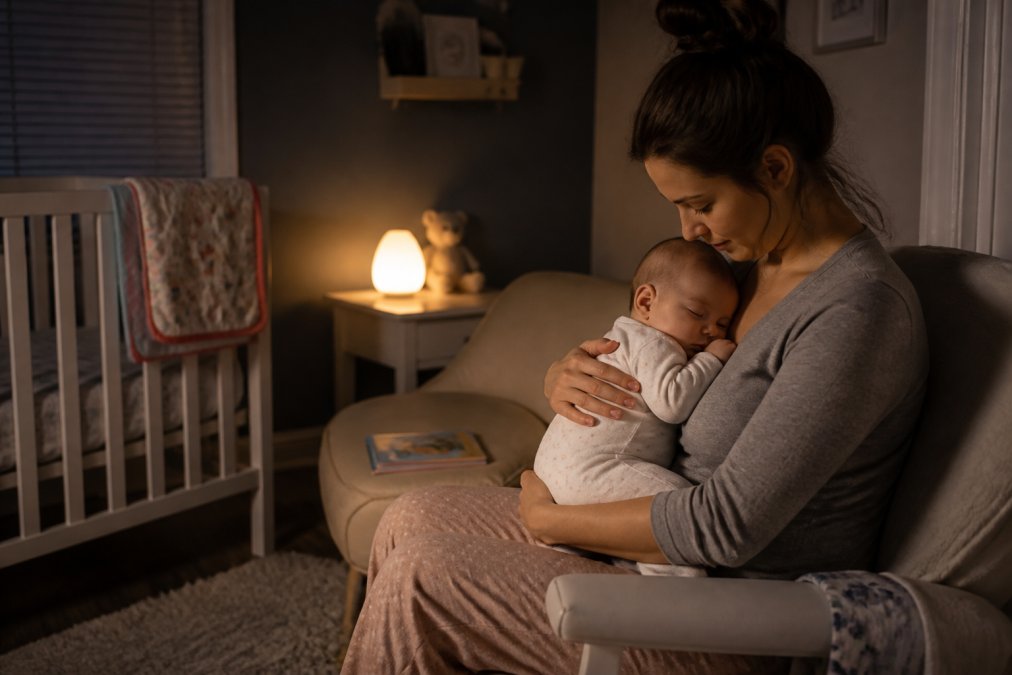
Infant Sleep Hygiene Tips for Better Nights
Infant sleep hygiene is about the conditions around sleep, not the baby's willpower. The room, the timing, the light, and the wind-down all shape how quickly a baby drifts off. Most guides stop at "dark and cool." The specifics below are what actually move the needle.
Light and the body clock. Babies are not born with a mature circadian rhythm. Melatonin production starts to settle somewhere around 3 to 4 months, which is why very young infants sleep in short, scattered blocks no matter what you do. In the two hours before bed, drop the lights low and skip overhead fixtures. Bright light in that window suppresses melatonin and pushes sleep later. In the morning, the opposite helps: open the curtains and get daylight on your baby's face within the first hour of waking. That contrast is what teaches the internal clock.
Room temperature and humidity. A common target is roughly 20 to 22 degrees Celsius for sleep, with a light layer of clothing. Overheating is a known risk factor for sleep-related infant deaths, so err on the cooler side and check the back of the neck rather than the hands or feet, which run cool normally. Dry air irritates small nasal passages and can wake a baby repeatedly. A humidity level around 40 to 50 percent is a reasonable range; a cheap hygrometer takes the guesswork out.
Safe sleep surface. The Canadian Paediatric Society and Health Canada both recommend babies sleep on their back, on a firm, flat surface, in the same room as a parent for at least the first six months. That means no pillows, no bumper pads, no loose blankets, and no toys in the sleep space. A fitted sheet on a firm mattress is the whole setup. If you use a sleep sack for warmth, choose one sized to your baby's weight and skip it once your baby can roll and is unswaddled.
Timing and sleep cues. Watch for early cues, not late ones. Yawning, eye rubbing, and a glazed stare are early.
Pro TipIf your baby wakes at the same time every night, try shifting bedtime earlier by 15 minutes for three nights. Overtired babies often wake more, not less. Track it for a week before judging whether it worked.
None of this replaces safe sleep guidance, and none of it is a supplement. The conditions around sleep do more for most babies than anything you can buy.
Signs of Sleep Discomfort in Infants: What to Watch For
Signs of sleep discomfort in infants are easy to miss. Parents often read them as normal fussiness when something else is going on.
Watch for these patterns:
Frequent arching of the back or stiffening during feeds
Waking every 45 to 60 minutes, all night
Turning the head to one side only, or favouring one side
Grunting, straining, or pulling the legs up after feeding
Fussiness that peaks at the same time each evening
Pediatric Chiropractic for Sleep: A Gentle, Drug-Free Option
Pediatric chiropractic for sleep is a gentle, drug-free approach that looks at how a baby's spine and muscles move. When a baby favours one side or holds tension in the neck, sleep can suffer. A light assessment can show whether that is part of the picture.
Natural Sleep Aids and Herbal Therapies: Safety First
Melatonin. Not recommended for infants. In older children it is sometimes used under medical guidance, but infant dosing is not established, and melatonin is a hormone that can affect pubertal timing with repeated use. It is also sold in gummies with inconsistent amounts per piece.
Chamomile. Often given as tea, but the strength varies wildly between brands and even between batches. Chamomile is in the ragweed family, so it can trigger allergic reactions in sensitive babies. It also carries a small risk of interacting with sedatives.
Lavender. Best used as a room scent, not swallowed. Lavender oil is toxic if ingested and can cause vomiting and drowsiness. On skin, it must be heavily diluted; undiluted essential oil can burn an infant's skin. Keep diffusers out of reach and ventilate the room.
Passionflower. Used in some tinctures, but evidence in infants is essentially absent. Tinctures commonly contain alcohol, which is not suitable for infants at any dose.
Magnesium. Sometimes suggested for sleep, but infant dosing is delicate and excess magnesium can cause low blood pressure, weakness, and breathing problems. Do not give it without a clinician's direction.
Gripe water. Popular for colic, but formulas vary widely. Some older or imported versions have contained alcohol or sodium bicarbonate. Check the label every time, because formulations change.
Valerian and lemon balm. Occasionally appear in "baby calm" blends. Both lack infant safety data, and valerian can cause paradoxical agitation in some children.
Essential oils are never for swallowing. Even "food grade" labels do not make them safe for an infant's airway or gut.
Dilute before skin contact. A common guideline for adults is a 1 to 2 percent dilution; for infants, anything stronger is inappropriate, and many practitioners advise avoiding topical oils altogether in the first months.
Watch for interactions. Herbs can interact with medication, including anything a breastfeeding parent is taking, because some compounds pass into breast milk.
Stop and call for help if you see vomiting, rash, unusual drowsiness, difficulty breathing, or a change in feeding after any product.
The honest takeaway: for most infants, the evidence for herbal sleep aids is thin to nonexistent, and the safety data is thinner. Behavioral and sensory approaches carry no dosing risk and should come first.
Non-Supplemental Sensory Regulation: Calming Techniques Without Herbs
Calming techniques without herbs work on the senses, and they carry no dosing risk. This is one of the most underused tools for infant sleep. You can start tonight.
Try these:
Swaddling: a snug wrap can settle a young baby's startle reflex
White noise: steady sound, kept at a low volume and away from the cot
Gentle motion: slow rocking or a pram walk to ease the transition
Skin-to-skin contact: calms heart rate and breathing in both of you
Deep-pressure hold: a firm, still cuddle rather than a light tickle
When to Consult a Professional About Infant Sleep
Consult a professional when sleep problems last more than a few weeks, or when your baby seems uncomfortable rather than just awake. Persistent issues deserve a closer look.
Book a visit if you notice:
Poor weight gain or feeding trouble
Waking that never improves with routine changes
A strong head tilt or one-sided preference
Snoring, pauses in breathing, or noisy breathing
Your own exhaustion reaching a point where you feel unsafe or unwell
Frequently Asked Questions
What is the 5-3-3 rule for babies?
The 5-3-3 rule is a flexible guideline some parents use to balance nighttime feeding and sleep. It suggests offering a feed after 5 hours of sleep, then every 3 hours thereafter, and resettling for 3 minutes before responding to fussing. It is not a rigid schedule and should be adapted to your baby's hunger cues and your pediatrician's advice. Always prioritize your infant's nutritional needs and consult a professional if you have concerns.
How does pediatric chiropractic care support infant sleep?
Pediatric chiropractic care focuses on gentle, drug-free adjustments to address structural restrictions that may contribute to discomfort and poor sleep. Practitioners use light pressure and specialized techniques for infants. Some parents report improvements in sleep after addressing issues like torticollis or colic, but evidence is limited. Always choose a chiropractor experienced with infants and consult your pediatrician before starting care.
What environmental factors contribute to natural sleep relief for babies?
A dark, cool room (around 18-20°C) with white noise can help. Blackout curtains block light, and a fan or white noise machine provides consistent sound. Keep the sleep space free of loose bedding and toys. These adjustments support the circadian rhythm and reduce disturbances, making it easier for your baby to fall and stay asleep without medication.
Are there non-medicinal routines to help a baby stay asleep longer?
Yes. A consistent bedtime routine, such as a warm bath, gentle massage, and feeding in a dim room, signals that sleep is coming. Respond to drowsy cues early. For night wakings, keep lights low and interactions brief. These infant sleep hygiene tips can reduce reliance on sleep aids and help your baby learn to self-settle over time.