Is Chiropractic Safe for Newborns? A Parent's Guide
Table of Contents
- What Pediatric Chiropractic Care Actually Involves
- Is Chiropractic Safe for Newborns? What the Evidence Shows
- Signs a Baby Needs a Chiropractor
- Drug-Free Methods for Calming Restless Babies
- What to Expect at a Pediatric Chiropractic Visit
- How to Choose a Qualified Pediatric Chiropractor
- Frequently Asked Questions
Last Updated: September 23, 2026
What Pediatric Chiropractic Care Actually Involves
Pediatric chiropractic care is a hands-on, drug-free approach that uses gentle pressure on a baby's spine and joints to support movement and comfort. At Cafe of Life Chiropractic Studio, we offer natural, drug-free chiropractic care designed to enhance overall well-being.
A common mistake is assuming this looks like an adult adjustment scaled down. It doesn't.
How Infant Adjustments Differ From Adult Adjustments
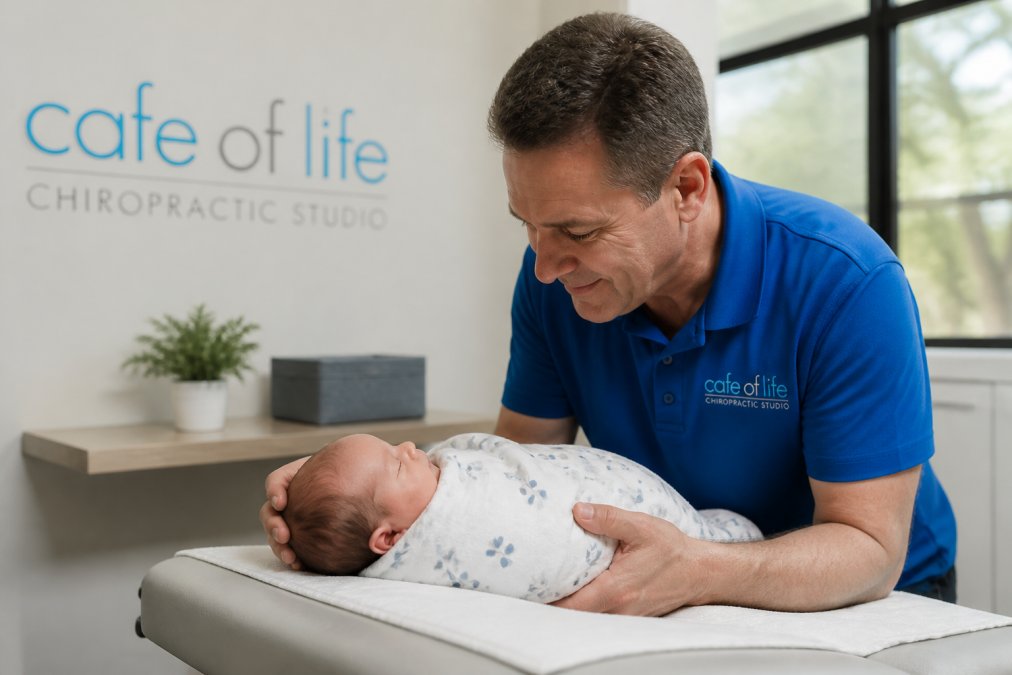
Infant adjustments use light touch, not force. A newborn's spine is mostly cartilage, so a practitioner applies gentle pressure with a fingertip, often no firmer than you'd use to test a ripe peach.
Adult adjustments involve firmer thrusts and joint movement.
- No forceful twisting or cracking
- Pressure measured in grams, not pounds
- Sessions often last only a few minutes
- Babies frequently sleep through the whole visit
Is Chiropractic Safe for Newborns? What the Evidence Shows
There is no simple yes or no. The honest position is that serious harm from infant spinal manipulation appears uncommon, but the evidence base is too thin to call the practice "proven safe," and any provider who tells you otherwise is overstating what the research supports.
Why the Evidence Base Is Thin
Most manual-therapy research is conducted on adults with neck or low-back pain. Newborns are a different population entirely: their spines are largely cartilage, their neck muscles are undeveloped, and they cannot report pain or numbness. That means adult safety data cannot simply be scaled down.
What the Reported Risks Actually Look Like
When adverse events are reported in infants, they tend to fall into a few categories rather than a single dramatic one:
- Cervical spine injury: The newborn neck is the most vulnerable region. High-velocity rotation or thrust to the cervical spine is the mechanism most often cited in case reports of serious injury.
- Rib fracture: Reported in some infant cases following manual pressure on the thorax.
- Delayed diagnosis: The most under-discussed risk. If a parent attributes a symptom to a "misalignment" and delays medical assessment, a treatable condition can progress.
- Transient distress: Crying, irritability, or disrupted feeding after a visit. Usually short-lived, but worth reporting to the practitioner.
How the Profession Is Regulated
Chiropractic is regulated provincially, not federally. Each province has a regulatory college that sets entry-to-practice requirements, a code of conduct, and a complaints process. There is no single national pediatric certification that all chiropractors hold, so the letters after a name vary by practitioner and by province. Before any hands-on care, confirm the practitioner is registered with their provincial college and in good standing; that is the baseline, not a bonus.
The Bottom Line
For a healthy newborn with a musculoskeletal concern such as feeding-related neck tightness, low-force care from a properly trained and regulated practitioner is generally described as low-risk, but "low-risk" is not "no-risk," and it is not "evidence-proven." For any infant with fever, neurological signs, or an undiagnosed condition, manual therapy is not the right first step. The safest posture for a parent is informed skepticism: ask what technique is being used, why, and what would make the practitioner stop.
Signs a Baby Needs a Chiropractor
Most parents who ask about infant chiropractic are not dealing with an emergency. They are dealing with a fussy baby, a flat spot, a head that always turns one way, or feeding that never quite clicked. Those are reasonable things to investigate, but the order matters: pediatric assessment first, manual therapy second, and only if a clinician agrees it is appropriate.
Reasons Parents Commonly Seek an Assessment
- Positional head preference or torticollis: The baby consistently turns to one side, and the neck feels tight in the other direction.
- Flat head shape (plagiocephaly): Often develops alongside a head-turn preference.
- Feeding difficulty: Latching, turning the head to feed, or arching during feeds.
- Fussiness or colic-like crying: Especially late-afternoon or evening crying that does not respond to the usual soothing.
- Asymmetrical movement: One arm or leg used noticeably less than the other.
None of these is a diagnosis. They are reasons to get one.
When Chiropractic Is Not Appropriate
This is the checklist most clinic blogs leave out. Do not pursue manual therapy, and seek medical care promptly, if your baby has any of the following:
- Fever in a newborn: In an infant under three months, a rectal temperature of 38°C (100.4°F) or higher is a medical emergency, not a musculoskeletal issue.
- Suspected infection: Poor feeding, lethargy, irritability that cannot be consoled, or a bulging soft spot.
- Neurological signs: Seizures, unusual stiffness or floppiness, persistent vomiting, or a sudden change in alertness.
- Suspected fracture or injury: Any fall, difficult delivery with documented injury, or swelling and guarding of a limb.
- Known structural or genetic conditions: Conditions affecting the spine, connective tissue, or bone density require specialist clearance before any manual therapy.
- Failure to thrive: Weight loss or poor weight gain needs a medical workup, not an adjustment.
- An undiagnosed condition: If no one has explained why your baby is uncomfortable, that explanation comes before treatment.
The Order of Operations
- Call your pediatrician or family doctor first. Describe the symptom and ask whether a musculoskeletal cause is plausible.
- Get a diagnosis or a referral. If the clinician suspects torticollis or positional preference, ask whether manual therapy is a reasonable adjunct.
- If yes, choose a regulated practitioner with infant-specific training and a willingness to coordinate with your doctor.
- Reassess after a short trial. If there is no improvement in a few visits, stop and go back to the clinician.
What to Say When You Call
Keep it concrete. "She only turns her head to the left and cries when I try to turn it right" is more useful than "she seems uncomfortable." Ask directly: "Could this be torticollis? Should I see anyone before trying anything hands-on?" A good clinician will tell you, and a good chiropractor will be relieved you asked.
Drug-Free Methods for Calming Restless Babies
Drug-free methods for calming restless babies start with the basics: feeding, sleep, and soothing touch. Many parents find that a warm bath, skin-to-skin contact, and gentle rocking ease evening fussiness.
- Swaddling and white noise
- Burping well after feeds
- Tummy time when awake and supervised
- A calm, dim room in the evening
What to Expect at a Pediatric Chiropractic Visit
A first pediatric visit usually starts with a health history and a postural assessment. The practitioner asks about birth, feeding, sleep, and any concerns, then observes how your baby moves and turns.

How to Choose a Qualified Pediatric Chiropractor
Look for clinical training specific to infants and children, not just general practice. Ask how many newborns the practitioner sees, and whether they work with pediatricians.
Before booking, ask:
- What pediatric training have you completed?
- What is your approach for a newborn?
- How do you handle informed consent with parents?
- When would you refer my baby to a doctor?
What to Check |
|---|
Pediatric training |
Referral habits |
Informed consent |
Comfort with questions |
Frequently Asked Questions
Can a chiropractor help a newborn with gas or colic?
Some parents report improvements in colic and gas symptoms after pediatric chiropractic care. A chiropractor may assess for spinal restrictions or musculoskeletal discomfort that could contribute to digestive distress. If your baby is feeding well, gaining weight, a gentle assessment may be worth discussing with your healthcare team.
How do I know if my baby needs a chiropractor?
Signs a baby needs a chiropractor may include feeding difficulties, favoring one side of the head (torticollis), flattening on one side of the skull, or unexplained restlessness. These signs can also point to other conditions, so a pediatrician visit is the right first step. If your baby has been checked and you want to explore drug-free methods for calming restless babies, a qualified pediatric chiropractor can assess joint mobility and posture. Always share your baby's full health history before any treatment.
Are there risks associated with pediatric chiropractic care?
Any manual therapy carries some risk, though serious adverse events from infant adjustments are rare when performed by a trained practitioner using low-force techniques. The main concern is that a practitioner without pediatric training may use too much force or miss an underlying medical condition. Always confirm the chiropractor has specific pediatric certification, ask about their safety protocols, and ensure they coordinate with your pediatrician. Informed consent means you understand the technique, the expected outcome, and the alternatives before agreeing to care.
How does a pediatric adjustment differ from an adult adjustment?
Pediatric adjustments use far less force than adult spinal manipulation. For a newborn, the pressure applied is often compared to the weight of a finger or the gentleness of a soft touch. Practitioners trained in infant adjustments focus on joint mobility and the cervical spine using low-force techniques, not the firm thrusts used on adults. The session is also shorter and includes postural assessment and observation. If a provider describes cracking or forceful movements for a newborn, that is a red flag.
Choosing care for a newborn comes with real worry, and you deserve straight answers, not sales talk. At Cafe of Life Chiropractic Studio, we offer a nurturing, drug-free environment built around pediatric development and every stage of life. Our holistic focus supports mobility, posture, and well-being for the whole family. Schedule your first visit today and get clear guidance for your baby's comfort.