
How to Use Holistic Stress Management for Anxiety
Last Updated: November 3, 2026
Quick Summary
Holistic stress management is worth it for anxiety because it works on the body and mind together, and research finds the strongest support for structured mindfulness, regular physical activity, and sleep regularity. Expect gradual change over weeks, not days, and combine two practices rather than five.
- Research most consistently supports structured mindfulness programs, regular physical activity, and sleep regularity for anxiety.
- Noticeable sleep improvement often appears within two to three weeks of consistent practice.
- If a technique shows no change after six to eight weeks, reassess rather than pushing harder.
- Start with two practices, not five, since adherence predicts results better than technique choice.
- See a physician or licensed therapist if anxiety is severe or affects work, eating, or sleep.
Table of Contents
- What Holistic Stress Management Means for Anxiety
- How Stress and Anxiety Affect Your Body and Mind
- The Benefits of Holistic Therapy for Anxiety
- Natural Ways to Manage Chronic Stress
- Chiropractic Care for Nervous System Regulation
- How to Choose and Combine Techniques That Fit Your Life
- When Holistic Care Is Not Enough
- Building Your First Month of Holistic Anxiety Support
- Frequently Asked Questions
What Holistic Stress Management Means for Anxiety
Holistic stress management is a coordinated approach to anxiety that works on the body and mind together, using breathing, movement, nutrition, sleep, and hands-on care rather than a single remedy. Anxiety can be understood as a whole-body pattern, not just a thought problem. The goal is a calmer nervous system you can rely on daily.
That distinction matters. A pill targets one pathway. A holistic plan builds several at once, so the effect compounds.
Below, we explain what the evidence supports, what to expect from each technique, and how to build a realistic first month. But first, here is what most guides get wrong: they promise calm without telling you which practices actually fit your life.
How Stress and Anxiety Affect Your Body and Mind
Anxiety is a stress response that stays switched on. The amygdala, the brain's threat detector, keeps firing, and the nervous system stays in a guarded state long after the trigger has passed. Muscles tighten, breathing turns shallow, and sleep suffers.
The physical fallout is real. Many people notice neck and shoulder tension, headaches, digestive upset, and fatigue before they connect any of it to stress. Over time, that constant load wears down emotional health and makes ordinary stressors feel larger.
The good news: a stress response that can be switched on can also be trained to settle. That is the whole premise behind mind-body approaches.
The Benefits of Holistic Therapy for Anxiety
Holistic therapy for anxiety helps by lowering the baseline load on your nervous system, so you are not starting each day already depleted. The benefits build in layers: better sleep supports mood, steady movement supports sleep, and breathing practice helps you interrupt a spiral in the moment.
Here is a realistic, technique-by-technique read on what the evidence supports and what to expect. Research tends to find the strongest and most consistent support for structured mindfulness programs, regular physical activity, and sleep regularity. Yoga and tai chi have moderate, growing support for anxiety and stress reduction, particularly when practiced consistently.
What most reviews miss is the sequence. People who start with sleep and breathing tend to stick with a plan longer than those who begin with an ambitious routine. Adherence is itself a benefit: a modest practice you actually do beats an evidence-backed program you abandon in week two.
- Calmer, more predictable mood across the day
- Fewer tension headaches and less jaw and shoulder tightness
- Better sleep onset and fewer night wakings
- More resilience when a stressor hits
- A sense of control you can build on
None of this is instant. Expect gradual change over weeks, not days. A common pattern is noticeable sleep improvement within two to three weeks, with broader mood and resilience changes accumulating over one to three months of consistent practice.
Watch out: treating all holistic techniques as equally supported is the most common mistake. Keeping evidence strength in view also means weighing natural anxiety supplements cautiously, since “natural” alone does not establish that they are effective or appropriate.
Natural Ways to Manage Chronic Stress
Natural ways to manage chronic stress work best when you stack small habits rather than overhauling everything at once. Pick one practice from each area below and run it for two weeks before adding more. The sections below also cover what each realistically costs in time and money, so you can judge whether it fits your life before you start.
Mindfulness, Meditation, and Breathing Exercises
Mindfulness is the practice of paying attention to the present moment without judgment, and it is one of the most accessible tools for anxiety. Start with five minutes of slow breathing: in for a count of four, out for a count of six. Longer exhales signal safety to the nervous system.
Mindfulness-based stress reduction, a structured eight-week program, is a common entry point. Free guided recordings and apps are widely available for beginners, and instructor-led programs add accountability. Time commitment is modest, 10 to 20 minutes daily is a common starting point.
Yoga, Tai Chi, and Other Mind-Body Approaches
Yoga, tai chi, and qigong combine movement with breath, which is why they suit anxious bodies so well. The gentle, repetitive motion gives the nervous system something steady to follow. Tai chi in particular is low-impact and easy on joints. Community classes and free online sessions are widely available options. Two sessions per week is a realistic starting rhythm.
Other options include EFT, sometimes called tapping, and hypnotherapy. Evidence for these varies, so treat them as additions, not replacements for the basics.
Nutrition, Sleep, and Physical Activity
Sleep is the foundation. A consistent wake time, a dark cool room, and a screen cutoff before bed do more for anxiety than most supplements. Physical activity, even a daily walk, helps burn off stress hormones and supports mood. Both are essentially free and require only scheduling. (Source: research on the benefits of mindfulness-based interventions)
Nutrition matters too. Regular meals, limited caffeine after midday, and steady hydration keep blood sugar and energy stable. A healthy lifestyle will not cure anxiety, but it makes every other tool work better.
Measuring Whether It Is Working
Before you start, pick two or three simple markers to track: sleep quality, how often you feel on edge, and whether daily tasks feel harder than usual. Rate each once a week on a simple scale and note adherence, how many days you actually practiced. A common pattern is that adherence predicts results better than technique choice. If a practice is not showing any change after six to eight weeks of consistent use, that is a signal to adjust rather than persist blindly.
Safety and When to Escalate
Most of these practices are low-risk, but a few need care. Gentle movement and breathing are generally safe for most people; check with a clinician first if you have a medical condition, are pregnant, or have a history of trauma that makes body-focused practices uncomfortable. Never stop prescribed medication on your own or delay medical care because a natural approach feels safer. If anxiety is severe, lasting weeks, or affecting your ability to work, eat, or sleep, see a physician or licensed therapist, holistic practices work best alongside evidence-based care, not in place of it.
Watch out: adding five practices at once is the fastest way to abandon all of them. Two practices, run consistently for a month, tell you far more than a scattered handful tried for a few days each.
Chiropractic Care for Nervous System Regulation
Some chiropractic approaches focus on how the spine and nervous system interact. Tension in the neck and upper back is sometimes associated with a guarded, stressed state, and chiropractic care aims to address mobility and physical tension. Research on nervous system effects is still developing.
Chiropractic care can be adapted for people who are sensitive to touch or have a history of pain, so it is worth discussing your needs with a qualified provider. Care that is drug-free and suited to different stages of life can be discussed during a consultation. If you want the deeper explanation of how this works, read our guide on how chiropractic affects the nervous system. To learn more, contact the studio for a consultation.
How to Choose and Combine Techniques That Fit Your Life
Choosing techniques comes down to three filters: time, cost, and what you will actually do on a bad day. A practice you skip is worth nothing. Build around your real schedule.
Use this simple decision guide:
| If this is you | Start with | Add next | Time per day |
|---|---|---|---|
| Desk job, tight neck and shoulders | Breathing practice | Chiropractic care | 10 minutes |
| Poor sleep and racing mind | Sleep routine | Mindfulness | 15 minutes |
| Low mood and restlessness | Daily walk | Yoga or tai chi | 20 minutes |
| Sensitive to touch or pain | Gentle movement | Tailored hands-on care | 10 minutes |
Combine two practices, not five. Once you know how often to schedule hands-on care, plan it into your month. Visit frequency varies by person, so discuss it with a qualified provider during a consultation. Our guide on how often to see a chiropractor and how to choose one can help you plan ahead.
When Holistic Care Is Not Enough
Holistic care has limits, and honesty about them matters. If anxiety is severe, lasting weeks, or affecting your ability to work, eat, or sleep, see a physician or licensed therapist (Understanding Anxiety). Clinical counseling, behavioral health services, and medication are legitimate treatment options, and using them is not a failure.
Watch out: never stop prescribed medication on your own or delay medical care because a natural approach feels safer. Holistic and conventional care work best together, not in opposition.
If you are weighing whether to escalate, a qualified professional can help you judge what support is appropriate. You can also read our patients' reviews and testimonials to see what care at our studio is like.
Building Your First Month of Holistic Anxiety Support
A first month works best as a staged plan, not a crash course. Here is how we would structure it.
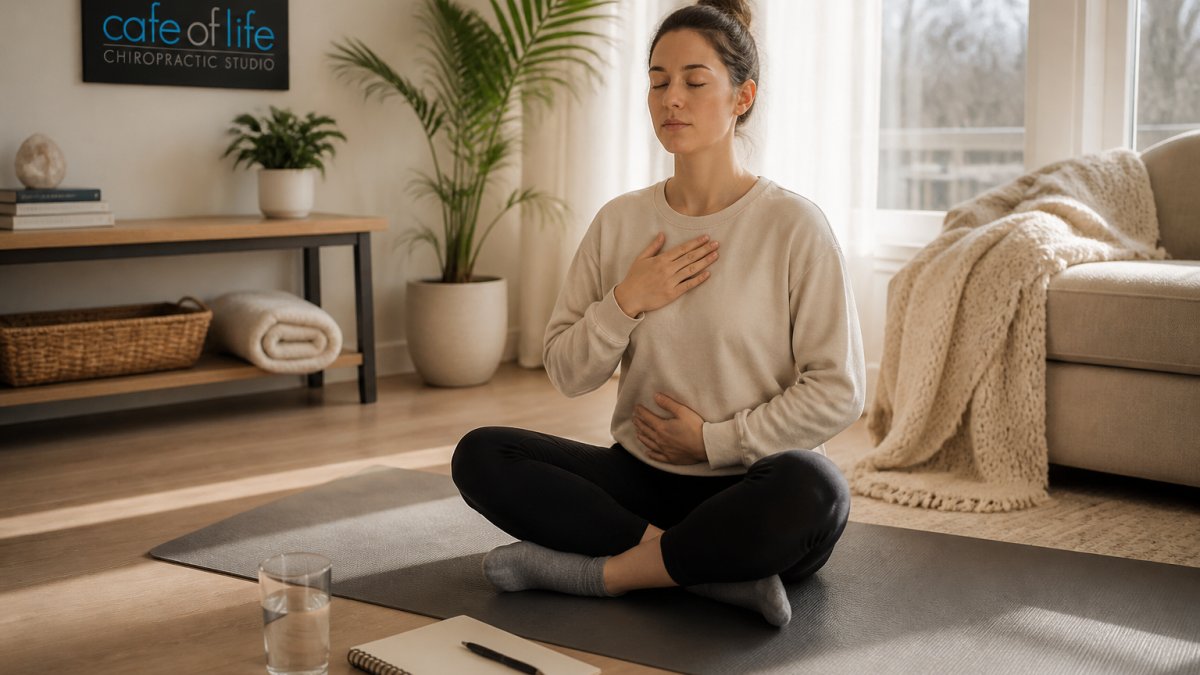
Week 1: Fix your wake time and add five minutes of slow breathing daily. Week 2: Add a 15-minute walk and cut caffeine after midday. Week 3: Introduce one mind-body session, such as yoga or tai chi, twice a week. Week 4: Review what helped. Add hands-on care if physical tension persists.
Track two things only: sleep quality and how often you feel on edge. Simple notes beat elaborate journals.
Frequently Asked Questions
What are the most effective holistic techniques for anxiety?
Research most consistently supports mindfulness-based stress reduction, breathing exercises, yoga, and regular physical activity. Cognitive behavioral therapy and clinical counseling remain the best-studied treatment options for anxiety, while techniques like tai chi, hypnotherapy, and EFT have smaller evidence bases. Most people get the best results by combining one daily calming practice, one movement practice, and professional support when symptoms interfere with work, sleep, or relationships.
How does chiropractic care for nervous system regulation fit into anxiety management?
Chiropractic care focuses on spinal alignment, posture, and mobility, which can ease muscle tension and discomfort that often accompany chronic stress. Research on chiropractic care for nervous system regulation is still developing. It works best as part of a broader plan that includes relaxation techniques, movement, sleep, and mental health support rather than as a standalone anxiety treatment.
Can holistic stress management replace traditional anxiety treatments?
For mild anxiety, holistic stress management can meaningfully reduce symptoms. For moderate to severe anxiety, panic disorders, or mood disorders, it should complement rather than replace therapy or medication. Talk to a qualified professional before stopping any prescribed treatment. A reasonable approach is to add holistic practices alongside your existing care and track how you feel over four to six weeks.
How do I choose a holistic practitioner for anxiety management?
Check credentials with the relevant provincial regulatory college, ask what training they have in anxiety or trauma, and confirm they will coordinate with your family doctor or therapist. Ask about their approach to sensitive patients, treatment frequency, and what results they typically expect. A trustworthy practitioner explains risks honestly and never promises a cure.
Anxiety rarely resolves on its own, but a steady plan gives your nervous system room to settle. At Cafe of Life Chiropractic Studio, we support that plan with natural, drug-free care tailored to every stage of life, a holistic focus on mobility and posture, and a welcoming space to start. Get started with Cafe of Life Chiropractic Studio and build a calmer baseline, one small habit at a time.